Research
March 06, 2025
Imports Jump to Record High in January in Anticipation of New Tariffs
The U.S. trade deficit surged to a record high in January, rising from $98.06 billion in December to $131.38 billion, easily surpassing the previous peak of $101.91 billion in March 2022, when supply chain disruptions were at their worst in the aftermath of the pandemic.
Goods imports soared from $293.36 billion to $329.55 billion, while goods exports saw a more modest increase from $170.08 billion to $172.78 billion. The biggest jumps in imports came from industrial supplies and materials (+$23.10 billion), consumer goods (+$6.02 billion), non-automotive capital goods (+$4.65 billion), automotive goods (+$856 million), and foods, feeds, and beverages (+$834 million). At the same time, the service-sector trade surplus was little changed, inching up from $25.22 billion to $25.39 billion.
The data suggest firms are front-loading imports ahead of potential tariffs, with notable spikes in finished metal shapes (+$20.48 billion), computers, accessories, and telecom equipment (+$5.31 billion), pharmaceuticals (+$5.25 billion), cell phones (+$1.16 billion), and passenger cars (+$1.00 billion).
For the restaurant sector, the trade balance for foods, feeds, and beverages is of particular interest. In January, exports in this category fell $1.03 billion to $13.43 billion, led by a decline in soybean shipments. Meanwhile, food imports climbed to $20.04 billion, up from $19.21 billion in December, with broad-based increases across cocoa beans, wine and beer, and meat products.
Looking ahead, volatility is likely to persist. If front-loading is driving much of this surge, future data may show a sharp reversal. Regardless, higher imports weigh on GDP growth, making these figures crucial as policymakers navigate tariff debates and broader economic implications. Either way, uncertainties about tariffs are already having a major impact on trade data and flows.
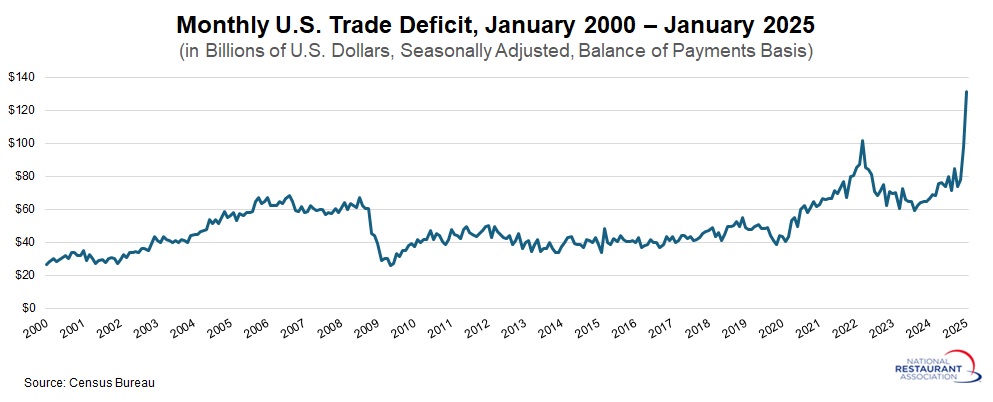
Goods imports soared from $293.36 billion to $329.55 billion, while goods exports saw a more modest increase from $170.08 billion to $172.78 billion. The biggest jumps in imports came from industrial supplies and materials (+$23.10 billion), consumer goods (+$6.02 billion), non-automotive capital goods (+$4.65 billion), automotive goods (+$856 million), and foods, feeds, and beverages (+$834 million). At the same time, the service-sector trade surplus was little changed, inching up from $25.22 billion to $25.39 billion.
The data suggest firms are front-loading imports ahead of potential tariffs, with notable spikes in finished metal shapes (+$20.48 billion), computers, accessories, and telecom equipment (+$5.31 billion), pharmaceuticals (+$5.25 billion), cell phones (+$1.16 billion), and passenger cars (+$1.00 billion).
For the restaurant sector, the trade balance for foods, feeds, and beverages is of particular interest. In January, exports in this category fell $1.03 billion to $13.43 billion, led by a decline in soybean shipments. Meanwhile, food imports climbed to $20.04 billion, up from $19.21 billion in December, with broad-based increases across cocoa beans, wine and beer, and meat products.
Looking ahead, volatility is likely to persist. If front-loading is driving much of this surge, future data may show a sharp reversal. Regardless, higher imports weigh on GDP growth, making these figures crucial as policymakers navigate tariff debates and broader economic implications. Either way, uncertainties about tariffs are already having a major impact on trade data and flows.
More from the Association's economists:
-
Research
Affordability Pressures Mount, but Consumers Continue to Prioritize Restaurants
September 17, 2026 -
Research
Higher-income households continue to drive restaurant sales
September 15, 2026The number of households with income above $100k surged by over 7 million during the last 3 years. -
Research
Restaurants remain resilient despite challenging business conditions
July 22, 2026The National Restaurant Association expects the operating environment to improve during the second half of 2026