Articles
April 07, 2026
Getting the nitty gritty on 'No Tax on Tips' and overtime
Association’s policy team, H&R Block talk deductions to service employees.
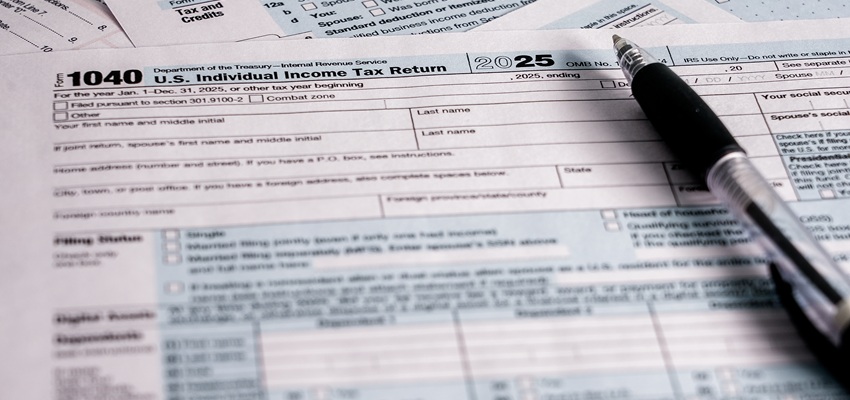
The experts explained what income qualifies, how the deductions work, and what tipped and hourly employees should do to prepare before time runs out on filing their taxes.
The National Restaurant Association and H&R Block recently hosted an employee-focused webinar to help restaurant and hospitality industry employees understand the new federal tax deduction changes and how to get the most out of them.
The presentation explained what income qualifies, how the deductions work, and what tipped and hourly employees should do to prepare before time runs out on filing their taxes.
The new federal tax deductions, created under the No Tax on Tips (NTOT) and No Tax on Overtime provisions of the 2025 Working Families Tax Cut Act, should significantly reduce tax liability for employees, especially those who earn tips and overtime pay.
It also created a “No Tax on Overtime” deduction that allows nonexempt W2 employees to deduct the premium portion—the “half” in time-and-a-half—of FLSA-required overtime pay of up to $12,500 for single filers and $25,000 for those filing jointly, with similar eligibility and phaseout thresholds.
“We really wanted to make sure that No Tax on Tips and No Tax on Overtime, something that President Trump turned into a campaign promise, turned out right,” said Sean Kennedy, Executive Vice President of Public Affairs for the Association, “and we’re really pleased that Congress did get it right. They didn’t make it more confusing for the operators or the employees.”
Kennedy, Aaron Frazier, the Association’s Vice President of Public Policy, and Andy Phillips, Vice President of the Tax Institute at H&R Block, served as the webinar’s subject matter experts. They explained how employees could reconstruct and document 2025 tip and overtime amounts, despite a one-year W2 reporting safe harbor, using W2 boxes 7, 8, and 14, Forms 4070 and 4137, employer statements and pay stubs, and then claiming the deductions on a new Schedule 1A. They further noted they could be claimed even when taking the standard deduction and yield savings depending on income and filing status.
Other key takeaways included:
For employers, the webinar shared new W 2 reporting requirements for qualified tips and overtime, starting with 2026 forms and the need for enhanced tracking systems.
“This comprehensive tax reform package made sweeping changes to our tax code,” Phillips said. “So, three reasons why this is important now is one, this is the first tax season that these deductions are available, and we know that many service workers still don’t know these benefits exist yet. Two, the window is limited. Right now, these provisions are effective for 2025 through 2028, giving you just four years to take advantage of them. Third, they are designed to put money back in your pocket, either through larger than expected refunds at tax filing or by reducing paycheck withholdings. The bottom line is, if you worked in a tip occupation and/or earned overtime pay in 2025, you should see an improved tax outcome this year.”
Frazier added he thinks there’s a possibility the deductions could be extended.
“In the Senate, No Tax on Tips was voted by unanimous consent,” he said. “No one objected. They’re wildly popular tax deductions, so I’d say there’s a good chance they’ll get extended by two, three, or even four years. I don’t think they’ll necessarily become permanent, and they might get tweaked a little bit, but I think they’ll be sticking around long enough for employers and employees to get sharp on this specific policy.”
Listen to the presentation On Demand now!
The presentation explained what income qualifies, how the deductions work, and what tipped and hourly employees should do to prepare before time runs out on filing their taxes.
The new federal tax deductions, created under the No Tax on Tips (NTOT) and No Tax on Overtime provisions of the 2025 Working Families Tax Cut Act, should significantly reduce tax liability for employees, especially those who earn tips and overtime pay.
Learning about 'No Tax on Tips' and overtime
The legislation, which features a temporary “no tax on tips” deduction, allows eligible workers in tipping occupations to deduct up to $25,000 of qualified, voluntarily paid and properly reported tip income from federal taxable income between 2025 and 2028.It also created a “No Tax on Overtime” deduction that allows nonexempt W2 employees to deduct the premium portion—the “half” in time-and-a-half—of FLSA-required overtime pay of up to $12,500 for single filers and $25,000 for those filing jointly, with similar eligibility and phaseout thresholds.
“We really wanted to make sure that No Tax on Tips and No Tax on Overtime, something that President Trump turned into a campaign promise, turned out right,” said Sean Kennedy, Executive Vice President of Public Affairs for the Association, “and we’re really pleased that Congress did get it right. They didn’t make it more confusing for the operators or the employees.”
Kennedy, Aaron Frazier, the Association’s Vice President of Public Policy, and Andy Phillips, Vice President of the Tax Institute at H&R Block, served as the webinar’s subject matter experts. They explained how employees could reconstruct and document 2025 tip and overtime amounts, despite a one-year W2 reporting safe harbor, using W2 boxes 7, 8, and 14, Forms 4070 and 4137, employer statements and pay stubs, and then claiming the deductions on a new Schedule 1A. They further noted they could be claimed even when taking the standard deduction and yield savings depending on income and filing status.
Other key takeaways included:
- How the new federal NTOT deduction works and which tipped income may qualify
- What the NTOO deduction means for nonexempt employees who earn overtime pay
- Why accurate tip and wage reporting matters—and what employees should be prepared to share at tax time
- What to expect when filing 2025 tax returns, including practical guidance from tax professionals
What to plan for going forward
The presenters also focused on planning steps for 2026 and beyond, including updating Form W 4, which now has a worksheet for anticipated tips and overtime deductions, maintaining robust records, and coordinating with tax professionals or payroll providers.For employers, the webinar shared new W 2 reporting requirements for qualified tips and overtime, starting with 2026 forms and the need for enhanced tracking systems.
“This comprehensive tax reform package made sweeping changes to our tax code,” Phillips said. “So, three reasons why this is important now is one, this is the first tax season that these deductions are available, and we know that many service workers still don’t know these benefits exist yet. Two, the window is limited. Right now, these provisions are effective for 2025 through 2028, giving you just four years to take advantage of them. Third, they are designed to put money back in your pocket, either through larger than expected refunds at tax filing or by reducing paycheck withholdings. The bottom line is, if you worked in a tip occupation and/or earned overtime pay in 2025, you should see an improved tax outcome this year.”
Frazier added he thinks there’s a possibility the deductions could be extended.
“In the Senate, No Tax on Tips was voted by unanimous consent,” he said. “No one objected. They’re wildly popular tax deductions, so I’d say there’s a good chance they’ll get extended by two, three, or even four years. I don’t think they’ll necessarily become permanent, and they might get tweaked a little bit, but I think they’ll be sticking around long enough for employers and employees to get sharp on this specific policy.”
Listen to the presentation On Demand now!
Sign up for our Newsletter
The latest news from the National Restaurant Association, published every other Thursday
By clicking Submit I agree to receive email communications from the National Restaurant Association and agree to our Privacy Policy(Opens in a new window).